
Living Museum of Learning
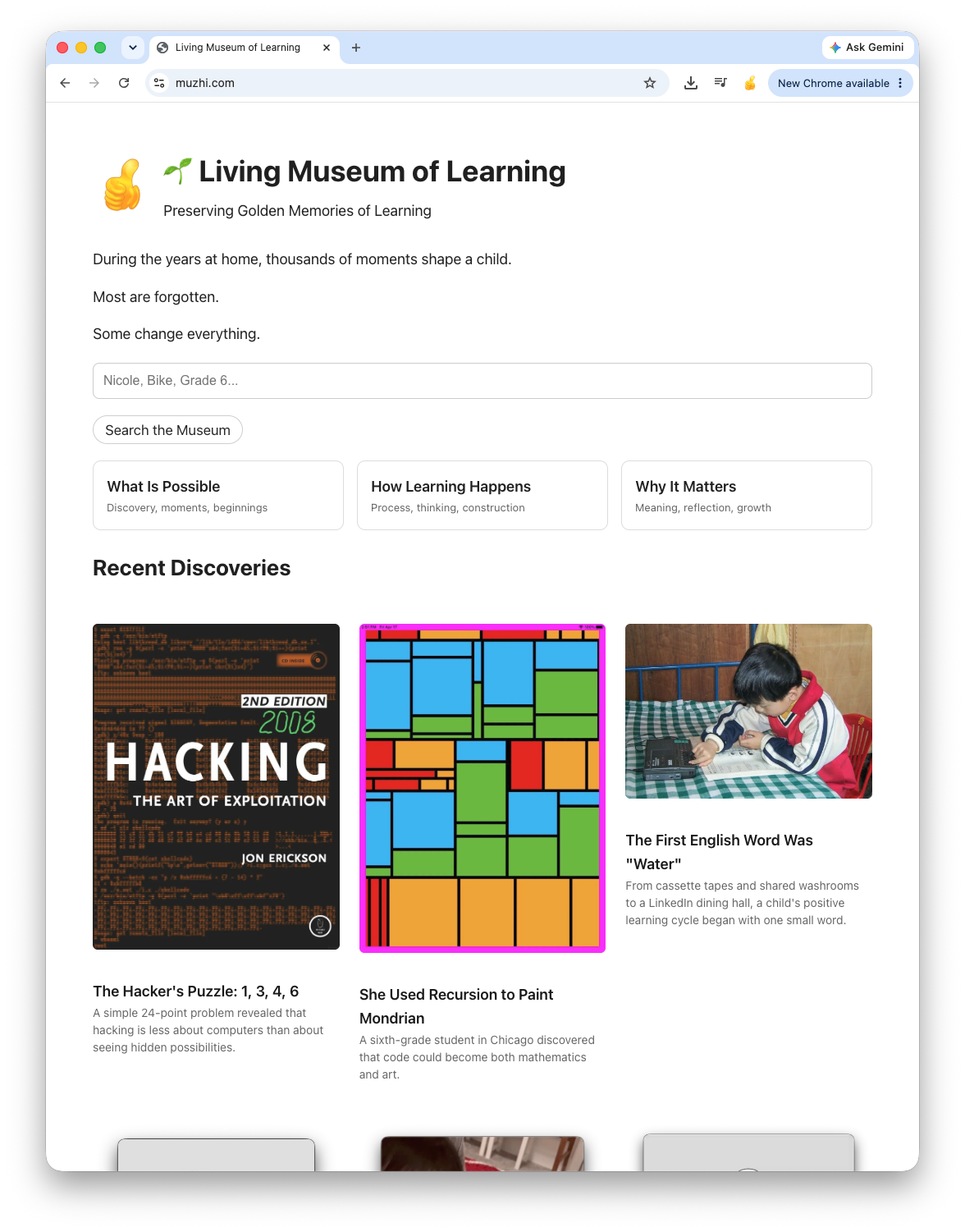
The Museum Learned to Search
By the time the museum approached seventy exhibits, something new happened.
The collection had grown large enough that visitors could no longer easily discover connections.
The exhibits existed.
But finding them became harder.
The museum itself had reached a new stage of development.
What began as a simple feature request:
"Can we search the exhibits?"
quickly expanded.
HTML pages became JSON.
JSON became MySQL.
The publishing system evolved.
Git repositories multiplied.
Search ranking appeared.
Back buttons arrived.
The search box itself eventually appeared on the homepage.
Earlier than expected.
The search box was not merely an interface element.
It represented a shift:
from collection to knowledge,
from pages to relationships,
from storage to discovery.
The museum had begun to ask questions about itself.
Building tools is itself a form of learning.
Many educational projects focus only on students.
But the adults who design environments continue learning as well.
Databases, deployment, Git workflows, search algorithms, and user interfaces all became part of the curator's own educational journey.
The museum became both:
a place to preserve learning,
and a place where learning continues.
A personal educational project can evolve into a living system that continues to teach its creator.
Real needs emerge from real use. Each new challenge—search, publishing, databases, deployment—becomes the next lesson.
Educational environments improve when their creators remain active learners themselves.